


Overview of Risk vs Impact
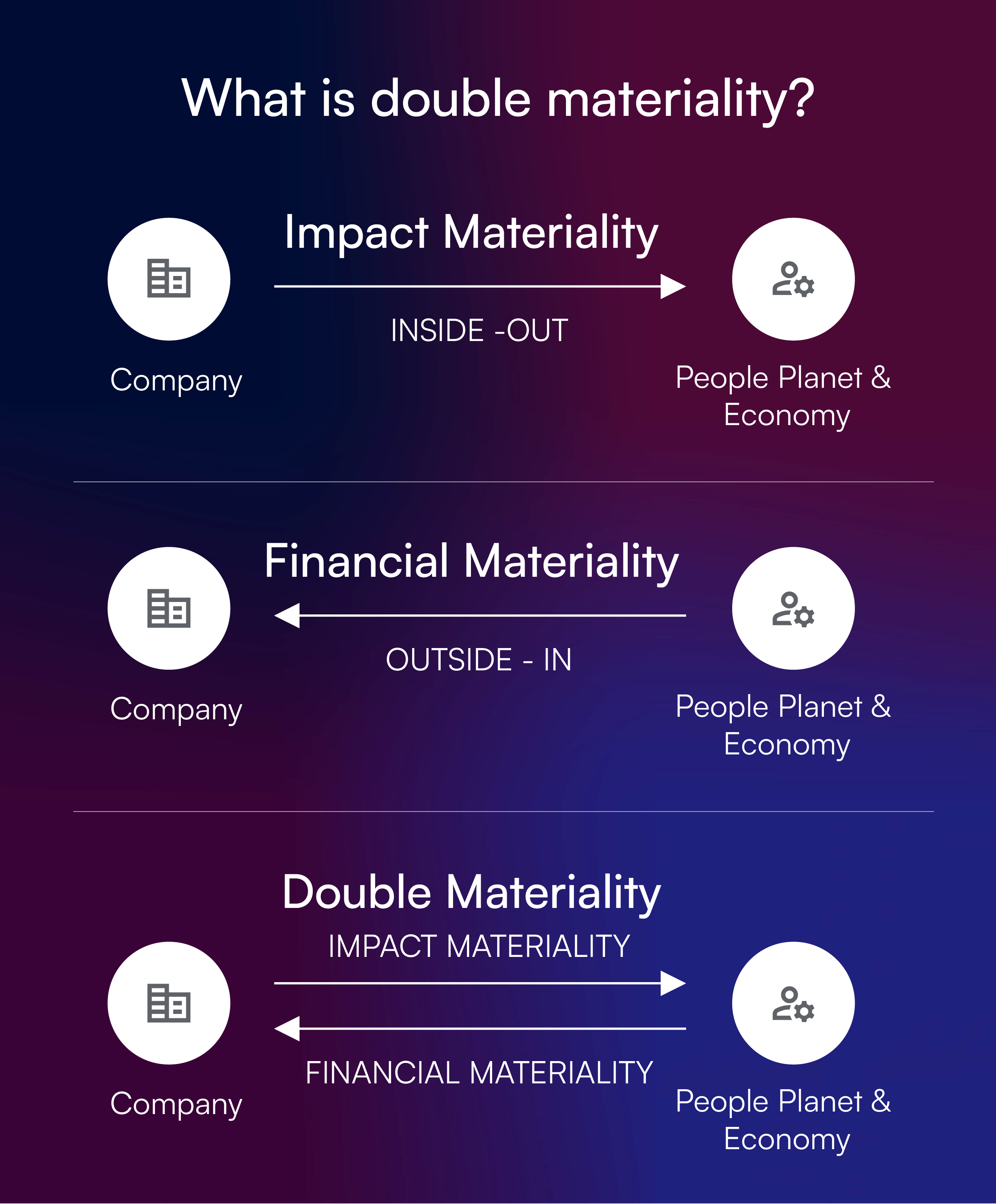
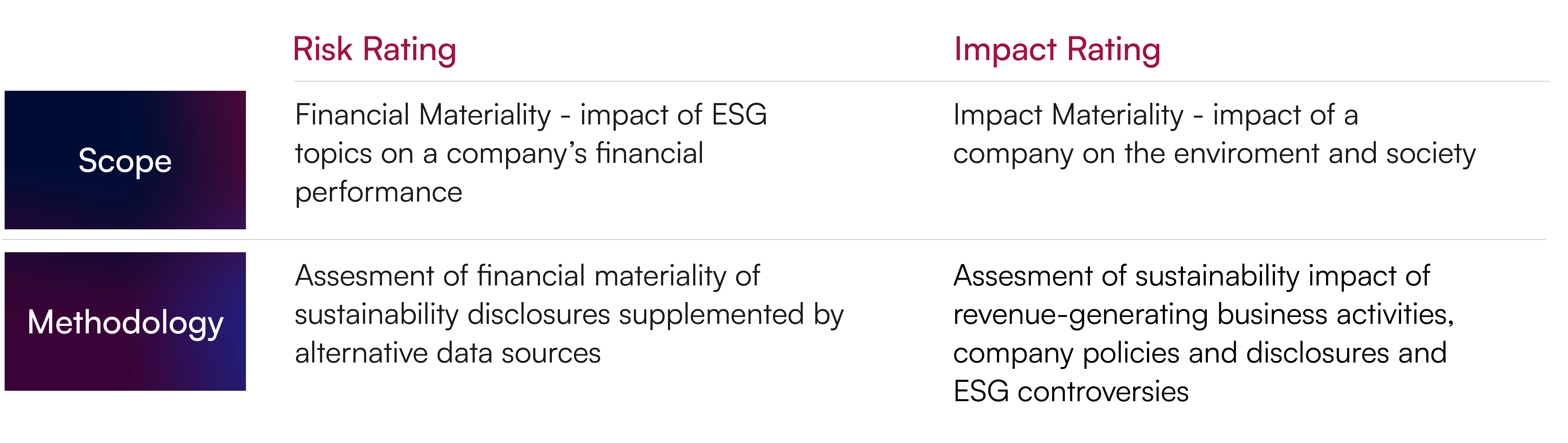
ESG risk ratings primarily assess how well a company manages its exposure to ESG-related risks that could potentially affect its financial performance. These ratings focus on the materiality of ESG factors to the specific industry and company, evaluating how effectively the organization mitigates these risks.
In contrast, ESG impact ratings measure the actual effect a company’s operations have on environmental and social outcomes, regardless of the financial implications for the company itself. These ratings attempt to quantify a company’s positive or negative contributions to issues such as climate change, biodiversity, human rights, or community development.
In terms used by global sustainability regulations, ESG risk ratings focus on financial materiality while impact ratings focus on impact materiality.
Read more: What Are Sovereign ESG Ratings?
Methodology of Risk Ratings vs Impact Ratings
Implications for Investors
Risk Management vs. Impact Generation
Those prioritizing ESG risk ratings are typically more concerned with protecting their investments from potential ESG-related downside. They aim to identify companies that are less likely to face regulatory challenges, reputational damage, or operational disruptions due to poor ESG practices. This approach may be particularly relevant for institutional investors with fiduciary responsibilities or those with a lower risk tolerance.
Investors emphasizing ESG impact ratings are often looking to generate positive social or environmental outcomes or minimise negative sustainability impact alongside financial returns. This approach aligns with the growing trend of impact investing and may appeal to investors who want their capital to drive positive change.
Short-term vs. Long-term Perspective
ESG risk ratings often provide insights into more immediate risks that could affect a company’s financial performance in the near to medium term. This can be valuable for investors with shorter investment horizons or those focused on quarterly or annual performance metrics.
ESG impact ratings may offer a longer-term view, as the positive impacts of sustainable practices and products can take time to materialize fully. Investors with a long-term outlook might find these ratings more relevant for identifying companies positioned to thrive in a future low-carbon, socially responsible economy.
Sector and Industry Considerations
Investors should consider how these ratings apply to their specific investment strategies. They should adjust their analysis accordingly.
Holistic Analysis and Potential Trade-offs
Many sophisticated investors are increasingly using both risk and impact ratings to gain a more comprehensive view of a company’s ESG profile. This approach can reveal potential trade-offs between risk management and positive impact.
For instance, a renewable energy company might have a high positive impact rating but also face significant ESG risks due to supply chain issues or governance concerns. Conversely, a traditional oil company might excel at managing ESG risks but have a negative overall environmental impact.
Engagement and Stewardship Opportunities
Understanding both risk and impact ratings can inform investor engagement strategies. Investors can use this information to identify areas where companies can improve their ESG performance and engage with management to encourage positive changes.
For active investors, these ratings can guide proxy voting decisions and help prioritize which ESG issues to focus on in shareholder resolutions.
Portfolio Construction and Diversification
Investors can use insights from both risk and impact ratings to construct more balanced and diversified sustainable portfolios. This might involve selecting companies with strong risk management practices as a core holding. Meanwhile, they can allocate a portion of the portfolio to high-impact companies in emerging sustainable industries. A key factor in successfully integrating insights is ensuring that data providers offer full transparency. This allows data to be homogenized for method and context.
Read more: Regulatory Scenario for ESG Rating Providers
Regulatory and Reporting Considerations
As ESG reporting requirements evolve globally, investors may find that impact ratings align more closely with current regulatory frameworks focused on impact materiality. Emerging regulations around sustainability reporting and taxonomies are increasing the relevance of impact ratings in the future. Investors should stay informed about these regulatory developments. They should understand how these might affect the importance of different ESG metrics.
FAQs - ESG Risk Ratings vs ESG Impact Ratings
1. What is the main difference between ESG risk ratings and ESG impact ratings?
ESG risk ratings assess how ESG issues may financially impact a company, while ESG impact ratings evaluate the real-world environmental and social effects of a company’s operations, regardless of financial materiality.
2. How does double materiality relate to ESG risk and impact ratings?
Double materiality combines financial materiality (covered by ESG risk ratings) and impact materiality (covered by ESG impact ratings), helping investors understand both how ESG factors affect a company and how the company affects society and the environment.
3. Why are ESG impact ratings becoming more important for investors?
ESG impact ratings are gaining importance due to regulations like CSRD and SFDR, which emphasize impact materiality, pushing investors to assess real sustainability outcomes alongside traditional financial risk considerations.
4. Should investors use ESG risk ratings or ESG impact ratings for portfolio decisions?
Most sophisticated investors use both ESG risk and impact ratings together to balance downside risk management with long-term sustainability outcomes, enabling more informed portfolio construction and engagement strategies.
5. How do ESG risk and impact ratings differ across industries?
In high-impact sectors like energy or manufacturing, both ratings are critical, while in service-based industries, ESG impact ratings often provide greater differentiation by highlighting social and environmental contributions beyond risk management.